Electrolycra Strip Manufacturer,Supplier and Exporter in India
Product Code : EL-MTP-11648
The Electrolycra Strip is a conductive smart material used to demonstrate stretch-dependent resistance, flexible circuits, switches, sensors, and electrical heating effects. It is suitable for school science classes, physics laboratories, chemistry materials lessons, STEM classrooms, teachers, laboratory suppliers, distributors, and educational procurement buyers.
Product Description
The Electrolycra Strip from School Equipments India is listed under Chemistry / Materials & their Properties with Product Code EL-MTP-11648. The listing describes it as a material that looks and feels like ordinary Lycra but is highly conductive.
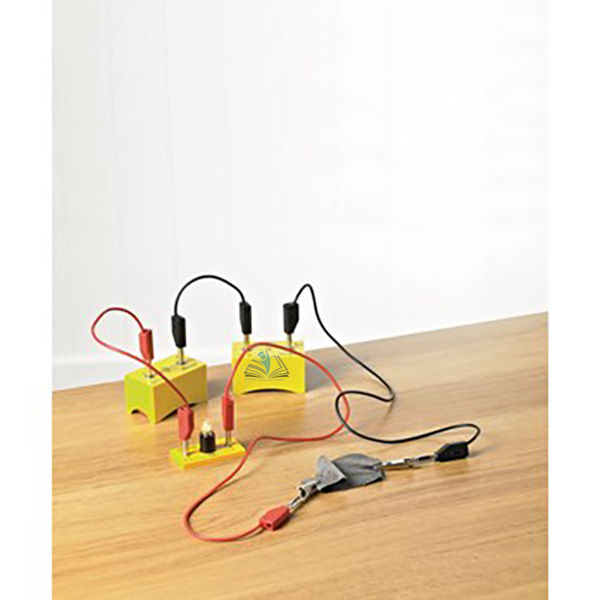
This smart material shows a clear relationship between stretching and electrical resistance. When pulled, the resistance increases, and when stretched very tightly in the specified orientation, the resistance drops again. It can be cut into narrow strips to form conducting “wires” or used as a soft, compliant alternative to metal and foil in switches and sensors.
Key Features
- Conductive stretch material: looks and feels like Lycra but conducts electricity.
- Stretch-dependent resistance: resistance changes according to how tightly the strip is stretched.
- Supplied strip size: confirmed as 1 x 100 x 1450 mm strip.
- Smart material classification: listed as Product Type: Smart Material.
- Electricity activation: product information lists the activation method as electricity.
- Flexible circuit use: can be cut into narrow strips for conducting wires, switches, and sensors.
- Heating-effect demonstration: a thin strip warms when current is passed through it.
Technical Specifications
|
Specification |
Detail |
|
Product Name |
Electrolycra Strip |
|
Primary Keyword |
Electrolycra Strip |
|
Secondary / Semantic Keywords |
conductive Lycra strip, smart material strip, stretch sensor material, conductive fabric for circuits, flexible circuit material, resistance change material, school smart materials kit, electrical heating fabric |
|
Brand |
School Equipments India |
|
Product Category |
Chemistry / Materials & their Properties / Smart Materials |
|
Intended Users |
Schools, science teachers, physics laboratories, chemistry materials classes, STEM classrooms, laboratory suppliers, distributors, and educational procurement buyers |
|
Capacity / Supplied Size |
1 x 100 x 1450 mm strip |
|
Material |
Electrolycra |
|
Product Type |
Smart Material |
|
Activation Method |
Electricity |
|
Unstretched Resistance |
5 Ω per 100 mm |
|
Stretched Resistance |
20 Ω when stretched to 150 mm in one axis; 2.5 Ω when stretched at 90° to this |
|
User |
Class |
|
Included Accessories |
BEK and leads not included |
What's Included in the Kit
- 1 x Electrolycra Strip, 100 x 1450 mm
- BEK and connecting leads are not included
- Instruction sheet, safety sheet, crocodile leads, storage pouch, or certificate
Applications / Uses
- Demonstrating stretch-dependent electrical resistance
- Building simple flexible circuits using conductive fabric strips
- Creating classroom models of switches and stretch sensors
- Showing how current can produce warming in a thin conductive strip
- Explaining smart materials and wearable-electronics concepts
- Supporting STEM activities on sensors, resistance, circuits, and material response
How to Use the Electrolycra Strip
- Cut a small working strip only if the classroom activity requires it.
- For a basic trial, use the listed application example of a 25 mm wide x 300 mm long strip.
- Connect the strip into a simple low-voltage circuit using suitable crocodile clip leads.
- Measure the resistance before stretching the strip.
- Stretch the strip gradually and observe how resistance changes.
- Change the stretching direction and compare the resistance response.
- For heating-effect observation, use only the approved low-voltage setup, such as the listed 6V battery activity.
- Switch off and disconnect the circuit before handling or storing the material.
Safety note: Use Electrolycra Strip only with low-voltage supervised circuits. Do not connect it to mains electricity. The strip may warm when current passes through it, so do not touch the heated conductive section directly during or immediately after use.
Care & Maintenance
- Store the strip dry, flat, and away from sharp objects or chemical splashes.
- Avoid overstretching, tearing, folding sharply, or cutting more material than required.
- Use clean crocodile clips and avoid loose electrical connections.
- Discard damaged, burnt, frayed, or contaminated sections according to school safety policy.
Why Choose School Equipments India
School Equipments India manufactures and exports scientific laboratory instruments, lab experiment setups, science kits, mathematics kits, didactic models, and STEM models. The brand supplies smart materials, chemistry materials resources, physics circuit equipment, and STEM teaching aids for schools, colleges, laboratories, distributors, and procurement projects. Its materials range supports hands-on demonstrations of conductivity, resistance, polymers, sensors, and modern materials. Buyers can request final specifications before ordering to confirm safety documentation, packaging, and classroom compatibility.
Frequently Asked Questions
What is an Electrolycra Strip used for?
An Electrolycra Strip is used to demonstrate conductive stretch fabric, stretch-dependent resistance, flexible circuits, switches, sensors, and electrical heating effects.
What size is supplied?
The confirmed supplied size is 1 x 100 x 1450 mm strip.
What is the unstretched resistance?
The listing confirms unstretched resistance as 5 Ω per 100 mm.
How does stretching affect the resistance?
The resistance increases when the strip is stretched to 150 mm in one axis, reaching 20 Ω, and drops to 2.5 Ω when stretched at 90° to that direction.
Are leads included with the strip?
No. The listing states that BEK and leads are not included.
For related smart-material resources, explore Electrolycra Strip, materials and their properties equipment, Smart Materials Kit, and electricity and electromagnetism apparatus for institutional enquiries.