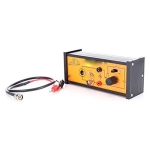
Quick Answer: The Nuclear Reactor Model is a physics teaching aid for explaining controlled nuclear fission, chain reactions and how a reactor manages a sustained chain reaction to release energy.
Last updated: October 2026
Key Features
Explains how atomic nuclei split and release energy
Shows how released neutrons can sustain successive fission events
Supports discussion of controlled versus uncontrolled chain reactions
Links nuclear reactions to heat generation and energy conversion
About This Product
Moving from flat textbook diagrams to a three-dimensional model, students follow how fission releases energy and additional neutrons, and how those neutrons can trigger further fission. Teachers then explain how a reactor regulates the chain reaction so that energy is released in a managed way. The model suits lessons on atomic physics, radioactivity and nuclear energy, as well as supervised science exhibitions. Besides buyers across India, the Nuclear Reactor Model can be exported to institutions in Botswana, Burkina Faso, Georgia, Iran and Malta.
Frequently Asked Questions
Q1. What is a chain reaction in a reactor? When a nucleus splits, it releases energy and additional neutrons. Those neutrons can cause further fission events, and a reactor controls this chain so that energy is released in a managed way.

.png)


 (1).png)
.png)