Structure of Atom Model Manufacturer,Supplier and Exporter in India

Structure of Atom Model

Product Code : SCL-AS-12499

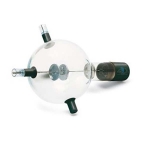
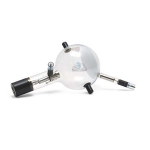
The Structure of Atom Model is a science teaching aid used for demonstrating the fundamental organization of an atom, including its central nucleus and surrounding electrons. Designed for teachers, school students, science laboratories, and STEM classrooms, it helps learners visualize protons, neutrons, electrons, atomic nuclei, and basic electron arrangements through a clear physical representation.

Product Description

The Structure of Atom Model supports introductory teaching of atomic structure. An atom contains a compact nucleus made of positively charged protons and, in most atoms, electrically neutral neutrons. Negatively charged electrons occupy the surrounding electronic region and determine many of an element's chemical properties.

This educational model can support lessons on subatomic particles, atomic number, mass number, ions, isotopes, electron shells, and the periodic table. It provides a visual bridge between textbook diagrams and classroom discussion. Construction material, dimensions, weight, scale, exact particle count, and physical configuration were not supplied, so no unsupported product specifications are claimed.

Key Features

  • Introduces basic atomic structure: Helps explain the relationship between the central nucleus and surrounding electrons.
  • Supports subatomic-particle lessons: Provides a visual basis for discussing protons, neutrons, and electrons.
  • Clarifies electrical charges: Helps distinguish positively charged protons, neutral neutrons, and negatively charged electrons.
  • Supports atomic-number concepts: Reinforces that an element's atomic number is determined by its proton count.
  • Builds foundations for isotope learning: Helps introduce atoms of the same element that differ in neutron number.
  • Supports ion formation lessons: Provides a basis for explaining how electron gain or loss produces charged species.
  • Suitable for classroom demonstrations: Useful for guided teaching, revision, and supervised student discussion.

Technical Specifications

Specification

Detail

Product Name

Structure of Atom Model

Brand

School Equipments

Product Type

Atomic structure teaching model

Primary Teaching Concept

General atomic structure and subatomic particles

Particles Studied

Protons, neutrons, and electrons

Nuclear Components

Protons and, for most atoms, neutrons

Electron Concept

Electrons occupy the electronic region surrounding the nucleus

What's Included in the Kit

  • Structure of Atom Model

No additional pieces, accessories, particle quantities, or separate components are claimed because an exact supplied component list was not available.

Applications / Uses

  • Introducing the fundamental structure of an atom.
  • Teaching the roles and charges of protons, neutrons, and electrons.
  • Explaining the difference between the nucleus and the surrounding electronic region.
  • Supporting lessons on atomic number and mass number.
  • Introducing ions through electron gain and electron loss.
  • Explaining isotopes through changes in neutron number.
  • Preparing students for further study of electron configuration and chemical bonding.

How to Use the Structure of Atom Model

  1. Begin by identifying the central region representing the atomic nucleus.
  2. Explain that protons carry positive charge and are located within the nucleus.
  3. Introduce neutrons as electrically neutral nuclear particles present in most atomic nuclei.
  4. Identify the representation of electrons surrounding the nucleus and explain their negative electrical charge.
  5. Use the model to discuss how proton number determines the identity of an element.
  6. Extend the discussion to ions by explaining how gaining or losing electrons changes net electrical charge.
  7. Introduce isotopes by explaining that atoms of one element can contain different numbers of neutrons.
  8. Compare these concepts with the Structure and Bonding Kit for broader study of nuclei, orbitals, isotopes, and bonding.

Safety and handling note: Use the model under appropriate classroom supervision. Handle all components carefully and follow any product-specific instructions provided with the supplied product.

Care & Maintenance

  • Store the model in a clean, dry place after classroom use.
  • Handle all components carefully to reduce the risk of physical damage or loss.
  • Use a soft, dry cloth for routine cleaning unless different manufacturer instructions are supplied.
  • Avoid solvents and abrasive cleaners unless compatibility with the construction material has been confirmed.

Why Choose School Equipments

School Equipments manufactures and supplies educational laboratory equipment and science teaching instruments for schools, colleges, laboratories, and institutional buyers. Its product portfolio includes scientific laboratory instruments, chemistry equipment, classroom teaching aids, mathematics resources, didactic models, and STEM products. Related products on the website include specialist resources for atomic structure, bonding, isotopes, ions, and periodic-table instruction. This broad educational range supports classroom demonstrations and international equipment procurement requirements.

Frequently Asked Questions

What is the Structure of Atom Model used for?

It is used to demonstrate the fundamental organization of an atom, including its nucleus, protons, neutrons, electrons, and surrounding electronic region.

What particles are found inside an atom?

The three commonly introduced subatomic particles are protons, neutrons, and electrons. Protons and neutrons are associated with the nucleus, while electrons occupy the surrounding electronic region.

What determines the atomic number of an element?

The atomic number is determined by the number of protons in the nucleus. Every atom of a particular chemical element has the same proton number.

Can the model be used to explain ions?

Yes. A teacher can use the atomic-structure concept to explain that gaining or losing electrons changes the net electrical charge of an atom or group of atoms.

Can the Structure of Atom Model be used to teach isotopes?

Yes. It can support an introductory explanation that isotopes are atoms of the same element with the same proton number but different neutron numbers.

Is the Structure of Atom Model suitable for school laboratories?

Yes. It is suitable as a visual teaching aid for supervised science, chemistry, physics, and STEM lessons on atoms, subatomic particles, ions, isotopes, and introductory electron structure.

Explore the complete atomic structure equipment range, use the Teacher Kit for whole-class demonstrations, and relate atomic concepts to element classification with the Periodic Table Poster.

   
Supply of Structure of Atom Model from to Finland, France, Tanzania, Thailand, Sri Lanka, Congo, Costa Rica, Ivory Coast, Croatia, Cuba, Cyprus, Czech Republic, Denmark, Djibouti, Dominica, Afghanistan, Albania, Algeria, Andorra, Angola, Antigua and Barbuda, Argentina, Armenia, Australia, Austria, Azerbaijan, Bahamas, Bahrain, Bangladesh, Barbados, United Arab Emirates (UAE, Dubai), United Kingdom (London), United States, Uruguay, Uzbekistan, Vanuatu, Belarus, Belgium, Belize, Benin, Bhutan, Bolivia, Bosnia and Herzegovina, Botswana, Brazil, Brunei, Bulgaria, Burkina Faso, Burma Myanmar, East Timor, Ecuador, Egypt, El Salvador, Equatorial Guinea, Eritrea, Estonia, Ethiopia (Addis Ababa), Fiji, Burundi, Cambodia, Cameroon, Canada, Cape Verde, Central African Republic, Chad, Chile, Colombia. Math Teaching Kit suppliers in Luxembourg, Macedonia, Madagascar, Malawi (Lilongwe), Malaysia (Kuala Lumpur), Maldives, Mali, Malta, Marshall Islands, Mauritania, Mexico, Micronesia, Moldova, Monaco, Mongolia, Montenegro, Morocco, Mozambique, Namibia, Comoros, Congo. Math Teaching Kit manufacturers in Dominican Republic, Gabon, Gambia, Georgia, Germany, Ghana, Greece, Grenada, Guatemala, Guinea, Guinea-Bissau, Guyana, Haiti, Honduras, Hungary, Iceland, Indonesia, Iran, Iraq, Niger, Nigeria (Abuja), Norway, Oman, Palau, Panama, Papua New Guinea, Paraguay, Peru, Philippines (Manila), Poland, Ireland, Israel, Italy, Jamaica, Japan, Jordan, Kazakhstan, Kenya (Nairobi), Kiribati, Korea, Kuwait, Kyrgyzstan, Laos, Latvia, Lebanon, Lesotho, Liberia, Liechtenstein, Lithuania, Mauritius, Nauru, Nepal, Netherlands, New Zealand, Nicaragua, Portugal, Qatar, Romania, Russia, Rwanda (Kigali). Math Teaching Kit exportets to Saint Kitts and Nevis, Saint Lucia, Saint Vincent and the Grenadines, Samoa, San Marino, Sao Tome and Principe, Saudi Arabia, Senegal, Serbia, Seychelles, Sierra Leone, Singapore, Slovakia, Slovenia, Solomon Islands, Somalia, South Africa, South Sudan, Spain, Sudan, Suriname, Swaziland, Sweden, Switzerland, Syria, Tajikistan, Togo, Tonga, Trinidad and Tobago, Tunisia, Turkey, Turkmenistan, Tuvalu, Uganda (Kampala), Ukraine, Venezuela, Vietnam, Yemen , Zambia (Lusaka), Zimbabwe

Office Address

Works:

[email protected]

Follow Us