Quick Answer: The Angle Between Mirrors apparatus shows how two plane mirrors placed at an angle form multiple images, and how the number of images changes as the angle is changed.
Last updated: October 2026
Key Features
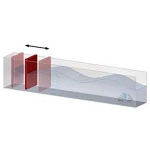
Two plane mirrors set at a selected angle form repeated images of an object.
Changing the mirror angle changes the number and arrangement of images.
Angles such as 90°, 72°, 60° or 45° can be compared.
Teaches reflection, symmetry, virtual images and angular positioning.
Explains the principle behind kaleidoscopes and mirror-pattern devices.
About This Product
With the apparatus on a flat table, the mirrors are set at a chosen angle and a small object or marker is placed between them. Students count the images formed by repeated reflection, change the angle and compare the new count, noting angle, image count and symmetry pattern in their notebooks. The observations can then be compared with mirror-angle calculations before formal ray diagrams are introduced. Besides buyers across India, the Angle Between Mirrors can be exported to institutions in Namibia, Bahamas, Palestine, United States and Djibouti.
Frequently Asked Questions
Q1. What changes when the angle between the mirrors is changed? The number and arrangement of the reflected images change. Students record the image count for each angle and compare the results.

.png)



.png)